How to treat spots/acne
Spots are a common skin condition that affects many people.
What actually causes spots to appear, and how can they be treated and prevented?
Causes
High sebum production - Excess sebum, dead skin cells and bacteria can create an environment for acne.
Dead skin cells - It is important to exfoliate the skin, as dead skin cells can block the pores, which can lead to breakouts.
Hormones - Changes in hormone levels can worsen breakouts
Weakened skin barrier - The skin barrier protects against environmental influences, prevents water loss and keeps moisture in. When the barrier is weakened, the skin can become more prone to irritation, inflammation and infections.
Dryness in the skin can trigger overproduction of sebum in an attempt to compensate. This excess oil can clog the pores and contribute to the development of spots.
Treatment
Sebum control
Sebum control, by reducing the skin's sebum production, is essential.
Salicylic acid
BHA is an oil-soluble acid that exfoliates and helps prevent pores from clogging again.
As the only oil-soluble acid, salicylic acid can penetrate into the pores, which helps dissolve the oil and dirt that lead to clogged pores.
In addition, salicylic acid reduces inflammation, which helps reduce redness in the skin.
Salicylic acid (BHA) is an important ingredient in the treatment of breakouts/spots.
AHA
Alpha hydroxy acids (AHAs) are a group of water-soluble acids widely used in skincare for their exfoliating properties. Examples of AHAs include glycolic acid, lactic acid and mandelic acid.
AHAs remove dead skin cells from the surface of the skin. This helps prevent the pores from clogging, which is a major factor in the development of spots.
Retinol
Retinol is a form of vitamin A, and is effective as a treatment for spots and has several positive effects on the skin.
Retinol promotes cell renewal, regulates sebum production, removes dead skin cells and reduces redness. In addition, retinol improves skin texture and scarring after breakouts. Retinol also helps prevent future breakouts.
Treatment protocol
Step 1: Getting Skin Ready
This is the first step towards healthy skin. This first step is important for normalising skin functions and optimising the effect of all protocols.
Exfoliating cleanser: Cleanse with salicylic acid, physical and chemical exfoliation.
Suitable for oily/congested/inflamed skin.
Dual Action scrub: A coarse scrub with both chemical and mechanical exfoliation. Contains lactic acid and salicylic acid.
Contains round magnesium crystals that do not scratch or damage the skin. For those with acne/impurities and high sebum production.
Oil Control Pads: Pads with 2% salicylic acid, to reduce breakouts and surface build-up and to minimise the appearance of pores.
For anyone with oily/inflamed skin.
Step 2: Prevent + Correct
Complexion Clarifying Serum: A water-based salicylic acid serum, unique because most
salicylic acid products today are alcohol-based, which dries out the skin. Clinically
proven effect on sebum reduction and on improving areas such as pigmentation, redness,
pores, acne, impurities and inflammation.
Daily Power Defense: An antioxidant serum with DNA-repairing enzymes that strengthens a weakened skin barrier.
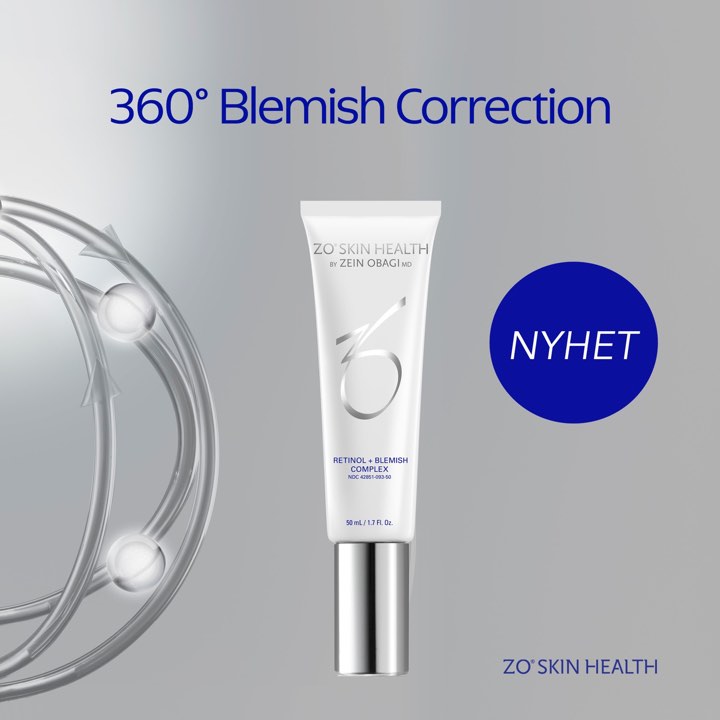
Retinol + Blemish Complex: Contains retinol (0.25%), encapsulated salicylic acid (2%) and other key ingredients to reduce breakouts and the scarring that follows from blemishes. The product is designed to address all the different phases in the development of breakouts, as well as the skin's repair phase after breakouts.
Complexion Clearing Masque: A clay mask with 10% sulphur that calms and helps prevent blemishes and congestion. Absorbs excess sebum, hydrates and calms irritated skin. Can be used 2-3 times a week.
Step 3: Protect
Sunscreen: When using active ingredients such as retinol and AHAs and BHAs, it is important to protect the skin properly. It is always recommended to use a high-SPF sunscreen every day.
To achieve the best possible result, the protocol must be used regularly. The products will begin to work after 2-5 weeks, while the best results are achieved with daily use over 5 months.
Skin reactions that occur when you start treatment are a sign of effective skin repair. Products that can cause short-term reactions include retinol.
Normal reactions that can occur after starting retinol are:
Redness
Dryness
Flaking
Irritation
Itching
These reactions can easily be managed by making various adjustments. To reduce reactions:
Use a lower strength of retinol
Apply a smaller amount of product
Use the product less often (start with 2-3 times a week) and increase gradually until the skin tolerates the product better
Apply moisturiser as needed
With the right treatment for spots and preventive care, an improvement in the skin can be achieved. Remember that it is important to find what works best for you, and to see a dermatologist for professional help if necessary.
Book a free consultation with us so that we can help you put together a skin programme tailored to your skin.